there are no words
more unfiltered thoughts on the end of things

I probably shouldn’t comment on this because I know what might come for me if I do, but I’ve spent the better part of this year writing about ICE, so here I am. I know this is still developing, I know more information will unfold, and I say this anyway.
I watched the videos. All of them. From every angle. I read the commentary and the reporting. I listened to the audio. I even sat through @iamkaizen’s take on it.
I sifted through the responses too—the ones that made me cringe, that broke my heart, that left me stunned by how far we’ve fallen morally. No, I wasn’t there and there are things I’m inevitably missing, but after everything here’s what I saw:
I saw Renee Good’s car stopped, positioned horizontally across the street. Her window is down and she appears to be speaking when an unmarked vehicle pulls up and two armed, masked men get out. The agent on her right immediately begins shouting: “Get the f**k out of the car.” He then begins to aggressively yank on her door handle in a way that is not calm nor is it a form of de-escalation (which is what they say training requires). It is a violent interaction, and it is at this exact moment that Renee begins to drive away.
As this is happening, there is a second agent in front of her bumper who then fires three shots. One goes through the windshield and kills her.
From the footage—the way her car is parked, and the way her window is down as she says things—it appears, though I’ll name this humbly, because we can’t hear her words, that she was using her body, her car, as a form of protest. A barrier—a way to intervene—before she is shot.
This is where people have rushed to say she was “obstructing” or “preventing ICE from doing their job” and I want to be clear about something: there is nothing—nothing—illegal about peaceful protest. It is a constitutionally protected right. Historically, justice movements have almost always required people to place their bodies in the way of violence: sit-ins, human chains, locked arms, standing in doorways, blocking roads. These have always been means of using presence as resistance. It is not criminal behavior, and it is not a means by which she deserved to die.
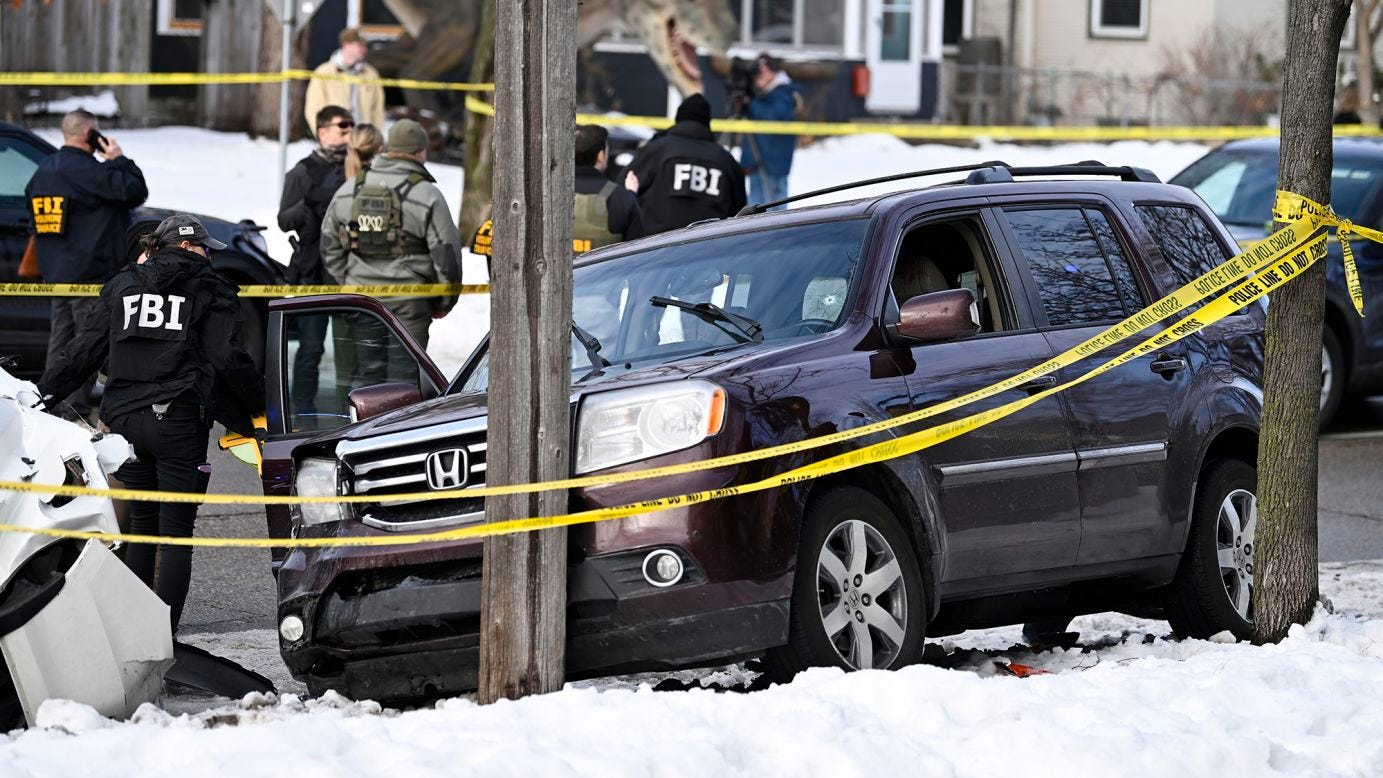
Now, one of the central questions people are asking is whether she intended to hit him? I don’t know. None of us do. But what I do know is this: if a masked, armed man—part of an organization with a documented history of dragging people out of cars, tackling them in the street, and disappearing them into detention—begins violently trying to force his way into my vehicle while screaming profanities, I will be terrified. And in terror, I will try to escape by any means possible. If I am in a car, I will most certainly press my foot on the gas and attempt to drive away. People can reframe that as aggression, but anyone with a clear head understands this as survival. Multiple witnesses confirmed that Renee was attempting to leave the area, not use her vehicle as a deadly weapon.1
Folks have also claimed the agent was “rammed” and “dragged.” Yet there is no visible evidence in the available footage of officers being injured. The agent who appears to have fired the fatal shots is later seen calmly returning to a silver SUV, which leaves the scene—driving through a red light.
Another central question folks are asking is whether the agent who fired the fatal shot believed he was acting in self-defense? Maybe he did. But it could also be true that so did Renee when she drove away and hit him with her car.
As a Christian I’m called to see the sanctity of all life, to remember that we are all human. As one commentator on IG said, “he is someone’s husband or father or brother, too,” and I don’t deny that. But even if we grant him the framing of self-defense, I don’t think it erases the deeper truth, one that is even described by bystanders:2
A woman witnessed her friends and neighbors being terrorized by agents of the state and she did what so many of us say we would do. She intervened. She tried to protect them. She tried to do something. And she was killed for it.
Killed by masked and armed agents from an institution that has spent months detaining people without warrants, without clear identification, without accountability. ICE insists its mission is public safety, yet this incident reflects excessive, disproportionate, and deadly force used against an unarmed civilian. It is difficult to reconcile that with any credible definition of “keeping people safe.” After the shooting, a doctor can be heard on video pleading with agents to allow them to give Renee care. The agents refuse. This is not the posture of people primarily concerned with preserving life.
And what followed matters as much as what happened. Kristi Noem labeled her a “domestic terrorist.” Donald Trump amplified the lie, blaming “the radical left.” Leaders of this country justified the killing of an innocent civilian—without empathy, without remorse—while reframing the exercise of a constitutional right to protest as terrorism. This is tyranny, plainly and unmistakably. And anyone who refuses to recognize the danger of this moment must reckon with the bloodshed enabled by such rhetoric and power.
Here we are, arguing over semantics instead of mourning a life and confronting the violence that took it. The fact that we are still slow-motion dissecting this video—still asking who was morally correct enough, who technically crossed the line first—reveals how profoundly disfigured our moral imagination has become.
You cannot unleash chaos on communities, terrorize people in broad daylight, and then claim innocence when the chaos you’ve created finally erupts; when the terror you have unleashed provokes fear and resistance. You do not get to be both the author of violence and its victim.
ICE has been abducting people from sidewalks and parking lots for months. That reality does not disappear because the narrative is politically inconvenient. And if we cannot name this plainly—if we cannot grieve honestly, speak truthfully, and refuse lies—then the danger is not only what has happened, but what we are allowing ourselves to become.
Rest in peace, Renee Good.